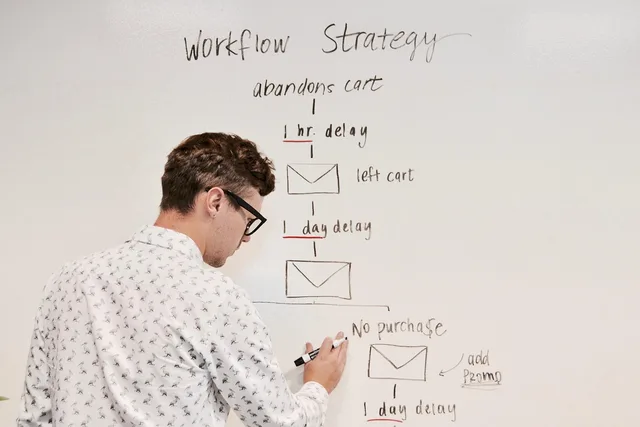
Strategy
Part of Email list building, cross-checked against the record, 2027 edition
Building an email subscriber list through value, not manufactured urgency
Email list building examples include resource libraries, alerts, short courses, events, digests, checkout choices, product education, and referrals.
What to take away
- Collect subscribers by giving something at a moment when the person already has a task: an alert, a short course, a digest, or an optional update at checkout.
- Every signup sentence names the sender, the value, the frequency and the way to stop. Say it once, in the form, and stop repeating it in three other places.
- Fit by business type. Publishers and nonprofits suit the resource library or the community digest. Retail suits the availability alert or optional checkout updates. Software suits in-product education, and event teams suit the event series.
- For a small team, the short course is the best first test. It produces a completion signal, not only a count of new addresses.
Manufactured urgency asks for an address before the person has a reason to give one. Value-first collection runs the other way. The person finishes a task, sees what else you publish, and decides. The Email list building record check lists the fields each source needs before you publish it.
Nine patterns and the wording that carries each one
- Resource library.Publish a reference people already use, then invite updates about it. Sample wording: "Monthly templates from [sender]. One email a month. Unsubscribe in one click."
- Availability alert.The CDC's email subscription page lets a visitor enter an address and choose topics, with frequency set by topic. Sample wording: "Email me when this item is back. At most one message a week. Stop any time."
- Short course.State the lesson count and the finish date. Sample wording: "Five lessons, one a day, from [sender]. Course messages only. Leave when you like."
- Event series.Keep registration, reminders and future invitations separate. Sample wording: "Reminders for this event from [sender]. We will ask before adding you to anything else."
- Community digest.The IRS e-News page splits subscription by topic, adds a preference step and confirms the address. Sample wording: "Weekly community digest from [sender]. Reply to leave."
- Optional checkout updates.Show the marketing choice apart from the receipt, which is the split US rules care about most; How CAN-SPAM shapes subscriber journeys walks through it. Sample wording: "Send me restock and sale notes. Receipts arrive either way."
- In-product education.Say whether the stream is service or marketing. Sample wording: "Tips for your account from [sender]. Product news only."
- Physical-location signup.Use a form, a QR code or a staff script with the same sentence every time. Sample wording: "Get class times by email from [sender]. One message a week."
- Referral page.Let a reader share a link so the friend chooses directly. Sample wording: "Share this page. Your friend signs up, not you."
Two of the nine come from public information services, and neither carries a commercial pitch. Copy the topic-choice structure and the confirmation step, not the authority behind them.
Example selection table, all nine patterns
Example selection table
| Pattern | Immediate value for the subscriber | Main risk to test |
|---|---|---|
| Resource library | A reference worth keeping | Low-fit traffic from incentives |
| Availability alert | Timing | Cadence and expired promises |
| Short course | Guided learning | Unrelated follow-up |
| Event series | Attendance | Passing the list to sponsors |
| Community digest | Belonging | Quoting members without consent |
| Optional checkout updates | Convenience | Blurring marketing and receipts |
| In-product education | Better product use | Mixing service with promotion |
| Physical-location signup | Local relevance | Adding staff, loyalty or card details |
| Referral page | Easy sharing | Addresses collected by the sender |
When two patterns look equally good, take the one with the cheaper failure. If the choice still feels unclear, Email list building questions covers the recurring ones, including the download-for-address trade.
Evidence, permissions and one-at-a-time testing
Run one or two sources at a time. Record the market, sender, audience, fields, exact wording, confirmation, preference controls, the date you checked the source and the owner of incidents. Without that record, a strong month tells you nothing about which source produced it.
In the United States, the FTC's CAN-SPAM compliance guide sets the content and opt-out duties a commercial message must meet. Canadian senders answer to a separate consent standard under the Anti-Spam Legislation. A signup sentence written for one market cannot be reused in the other without checking.
The NIST Privacy Framework offers a voluntary process for assigning privacy risk to owners. The W3C guidance on information and relationships asks that visual structure also be available to assistive technology, which applies to your signup form.
Both checks land on the page a new subscriber sees first. The welcome sequence is where the signup promise gets kept or broken, usually within minutes.